


发布时间: 2026/1/9

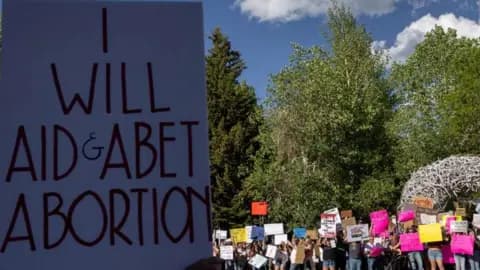
Getty Images
Wyoming’s Reproductive Rights Win: Abortion Remains Legal After Landmark Court Ruling
For folks across Wyoming who’ve been anxiously following the state’s bitter abortion battles, there’s big news: abortion will stay legal in the state, thanks to a decisive ruling from Wyoming’s Supreme Court. In a 4-1 decision handed down recently, the top court struck down two strict anti-abortion laws that had placed a near-total ban on the procedure, including the first state-level ban on abortion pills in the entire U.S. This victory comes amid ongoing national tensions over reproductive rights, sparked by the 2022 reversal of the landmark Roe v Wade decision that upended federal protections for abortion access.
The Court’s Verdict: A Fundamental Right to Bodily Autonomy
The justices didn’t mince words in their ruling, stating clearly that "a woman has a fundamental right to make her own health care decisions, including the decision to have an abortion." This directly pushed back against the state’s argument that abortion shouldn’t be considered a healthcare service, and thus couldn’t be protected under Wyoming’s constitution. For many residents, especially those who’ve feared losing access to critical reproductive care, this feels like a critical validation of their right to bodily autonomy. The ruling emphasizes that personal health choices should not be dictated by political agendas, but by individuals and their medical providers.
Who Brought the Case? A Coalition Fighting for Access
The legal challenge wasn’t mounted by a single group—it was a united front of four women (including two obstetricians), an abortion advocacy organization, and Wyoming’s only abortion provider: Wellspring Health Access in Casper. These plaintiffs didn’t just fight for abstract rights; they fought for the real, day-to-day access that patients rely on. For Wellspring, this ruling is more than a legal win—it means they can continue to serve patients who have few other options for reproductive care in the largely rural state. The coalition’s success shows the power of grassroots and medical groups coming together to defend essential rights.
What the Laws Entailed: Harshest Restrictions in the Nation
The two laws in question were among the harshest anti-abortion measures in the country. One banned abortion in almost all cases, with narrow exceptions only to save a pregnant woman’s life or in instances of rape or incest. The other was the nation’s first explicit ban on abortion pills, which are the most common method of pregnancy termination in the U.S., used by millions of people each year. Passed by Wyoming’s Republican-controlled legislature in 2023, that pill ban made it illegal to "prescribe, dispense, distribute, sell or use any drug for the purpose of procuring or performing an abortion." At the time, Antonio Serrano, advocacy director for the Wyoming ACLU, criticized the bill, saying, "a person's health, not politics, should guide important medical decisions - including the decision to have an abortion."
Republican Pushback: Calls for a Constitutional Amendment
Unsurprisingly, Wyoming’s Republican leaders aren’t happy with the court’s decision. Governor Mark Gordon expressed immediate disappointment, calling on state legislators to pass a constitutional amendment that would cement an abortion ban in Wyoming. "This ruling may settle, for now, a legal question, but it does not settle the moral one, nor does it reflect where many Wyoming citizens stand, including myself," he said. "It is time for this issue to go before the people for a vote, and I believe it should go before them this fall." This signals that the fight over reproductive rights in Wyoming is far from over, as both sides prepare for potential future legal and political battles.
The Post-Roe Landscape: Ongoing Legal Fights Across America
Wyoming is far from alone in this battle. Since 2022, when the U.S. Supreme Court reversed the 1973 Roe v Wade decision that had legalized abortion nationwide, dozens of states have passed strict abortion bans—and many of those bans are now tied up in court. More than a dozen states have enacted near-total bans, though several have been put on hold by judicial rulings. This back-and-forth continues to shape reproductive access across the country, with state courts playing an increasingly critical role in determining what reproductive rights look like for millions of people. For many, Wyoming’s ruling is a beacon of hope in an otherwise uncertain landscape for reproductive healthcare.