


发布时间: 2026/1/9

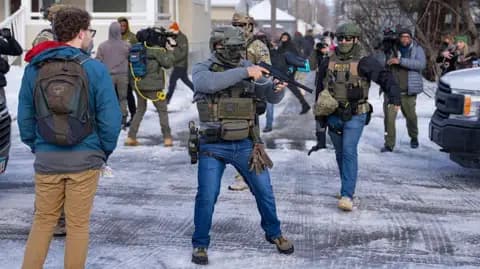
ICE and other federal officers stand at a Minneapolis intersection where protesters had gathered after the death of Renee Good
The fatal shooting of 37-year-old Renee Nicole Good in Minneapolis has ignited waves of local protests and cast harsh scrutiny on U.S. Immigration and Customs Enforcement (ICE). Since Donald Trump returned to the White House, ICE agents have made thousands of arrests—often in public spaces like grocery stores and neighborhood streets—pushing the agency deeper into communities nationwide. These aggressive tactics have drawn fierce pushback from residents who view ICE’s operations as an infringement on civil liberties and local safety, with Good’s death becoming a flashpoint for long-simmering anger over the agency’s expanding role.
What Is ICE, and How Has Trump Expanded Its Role?
ICE serves as the primary enforcer of Trump’s mass deportation initiative, a key promise from his 2024 election campaign. Since retaking office, Trump has significantly expanded the agency’s budget, size, and mandate, transforming it into a core tool for advancing his hardline immigration agenda. ICE’s core duties include enforcing federal immigration laws, investigating undocumented entry cases, and overseeing the removal of undocumented immigrants from the U.S. The agency was formed in 2002 as part of the Homeland Security Act, a response to the 9/11 attacks that created the Department of Homeland Security (DHS), with ICE as one of its subsidiary agencies. In recent months, however, Trump’s administration has broadened ICE’s scope far beyond its original post-9/11 mission, prioritizing large-scale raids over targeted law enforcement.
What Arrest Powers Do ICE Agents Hold?
ICE frames its work as a mix of public safety and national security efforts, but its authority differs sharply from local police departments across the U.S. Unlike local officers, ICE agents can stop, detain, and arrest individuals they suspect of being in the country without proper documentation, even without a warrant in certain scenarios. A critical limitation is that ICE agents generally cannot arrest U.S. citizens unless the individual interferes with an arrest or assaults an officer. Despite this restriction, news organization ProPublica documented over 170 incidents in the first nine months of Trump’s second term where federal agents wrongfully detained U.S. citizens, often mistaking them for undocumented immigrants. These cases have raised serious concerns about racial profiling and the agency’s lack of accountability in on-the-ground operations.
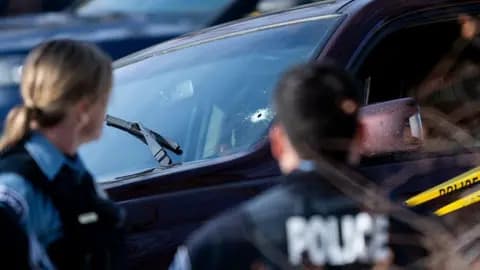
An ICE officer shot Renee Good while she was driving a car
When Can ICE Agents Use Deadly Force?
ICE’s use of force is governed by U.S. constitutional law, federal statutes, and internal Department of Homeland Security (DHS) guidelines. According to Chris Slobogin, director of Vanderbilt University Law School’s criminal justice program, the Constitution allows deadly force only if a person poses a serious threat to officers or bystanders, or has committed a violent crime. However, the U.S. Supreme Court has a long history of granting broad leeway to officers making split-second decisions, even if those choices are later found flawed with hindsight. A 2023 DHS policy memo clarifies that federal officers "may use deadly force only when necessary" when they have "a reasonable belief that the subject poses an imminent threat of death or serious bodily injury" to themselves or others. For Minneapolis residents, Good’s shooting has reignited debates over whether ICE agents are consistently adhering to these guidelines.
Where Does ICE Carry Out Its Operations?
Traditionally, ICE focuses its work inside the U.S. with limited staffing abroad, while its sister agency U.S. Customs and Border Protection (CBP) patrols national borders. But under Trump’s second term, these roles have blurred significantly, as the administration has pulled agents from multiple federal agencies to assist with immigration enforcement. Border Patrol officers now regularly operate far from the border, joining ICE in raids across major cities. In recent weeks, ICE and partner agencies have deployed hundreds of officers to Los Angeles, Chicago, and Minneapolis. The Associated Press reports that up to 2,000 federal officers will be sent to Minneapolis as part of the latest operation, a move that has only escalated tensions with local communities.
What Happens to Those Detained by ICE?
The scale of deportations under Trump’s second term has been staggering, with the administration reporting 605,000 deportations between January 20 and December 10, 2025. Officials also claim 1.9 million immigrants "voluntarily self-deported" following an aggressive campaign encouraging individuals to leave to avoid arrest. Outcomes for detained immigrants vary widely: some are temporarily held and released after questioning, while others are transferred to large detention facilities across the U.S. Many fight for legal status while in custody, but those who fail may face deportation. As of November 30, 2025, approximately 65,000 people were in ICE detention, per data from Syracuse University’s Transactional Records Access Clearinghouse. Immigration lawyers told the BBC that families and legal representatives often wait days to locate detained loved ones, creating immense stress and uncertainty.
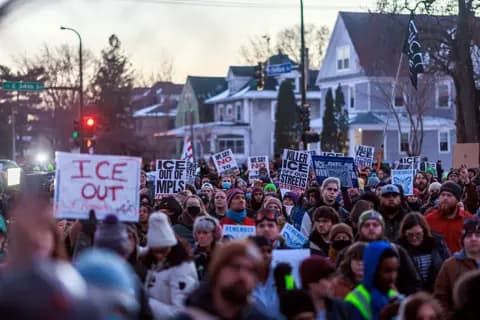
People demonstrate against ICE during a vigil honouring Renee Good, who was shot and killed by an immigration officer
Criticisms of ICE and Public Backlash
ICE’s operations have faced growing resistance from communities nationwide, particularly when agents partner with CBP to conduct raids. Local residents increasingly film ICE agents during arrests, using social media to document and protest the agency’s tactics. In some cases, these encounters turn violent, with residents clashing with agents over perceived unconstitutional overreach. In Chicago, a coalition of media organizations sued the Border Patrol last year, alleging excessive force against journalists, religious leaders, and protesters; a federal judge initially ruled in their favor before an appeals court overturned the decision. Good’s shooting is not an isolated incident: the Los Angeles Times reported two October 2025 cases where ICE agents shot at drivers, with DHS claiming the drivers threatened officers. ICE agents also face criticism for wearing masks during operations, which residents say hinders accountability, though DHS defends the practice as protection against doxxing.
Public Opinion on ICE and Trump’s Deportation Policies
Polling shows Americans hold divided views on Trump’s immigration enforcement plans. A October 2025 Pew Research Center survey found slightly more than half believe some level of deportation is necessary, a figure nearly identical to a March 2025 poll. However, 53% of U.S. adults think the administration is doing "too much" to deport undocumented immigrants, while only 36% support the current approach. This split reflects a broader national debate, with many Americans acknowledging the need for border security but opposing ICE’s aggressive tactics. For Minneapolis residents, Good’s death has deepened this divide, with some arguing ICE’s presence harms communities and others maintaining it upholds federal law.